Junkanoo!

By Jennifer

It was 4:45 a.m. on Boxing Day, Dec. 26. The marina was quiet and still. But two miles down the road a party was in full swing.

We rolled out of bed and into a cab hoping not to miss the unrivaled Bahamian parade of Junkanoo. As we stepped out into the deep dark night with kids in tow, the glow and hum of Bay Street came into focus. Within minutes we saw glittery dancers gyrating, trumpets heralding, cow bells clanging and hand-drums pounding. The pulse worked its way from chanting revelers’ feet to their very core.

To call this festival energizing is an understatement. As the parade winds its way through the streets of Nassau, the music and the rhythm take over and leave your body unknowingly, momentarily possessed by a tribal stride.

Definitely the highlight of Nassau. Unforgettable. 

Junkanoo occurs on Dec. 26 and Jan. 1 — beginning in the early hours of the morning (2:00 a.m.) and ending at dawn.

The festival is reminiscent of New Orleans’ Mardi Gras and Rio de Janeiro’s Carnival, but it is distinctly Bahamian and exists nowhere else. Parade participants — arranged in groups of up to 1,000 — are organised around a particular theme. Their costumes, dance and music reflect this theme. At the end of the Junkanoo procession, judges award cash prizes. The three main categories for the awards are: best music, best costume and best overall group presentation.

Arrival in Nassau

Route: Fort Lauderdale — Miami — North Bimini — Cat Cay — Chub Cay — Frazer’s Hog Cay — Nassau.

Dsc02198Dsc02204Dsc02212Dsc02215Dsc02217Dsc02230Dsc02229Dsc02227Dsc02231Dsc02236

By Jennifer

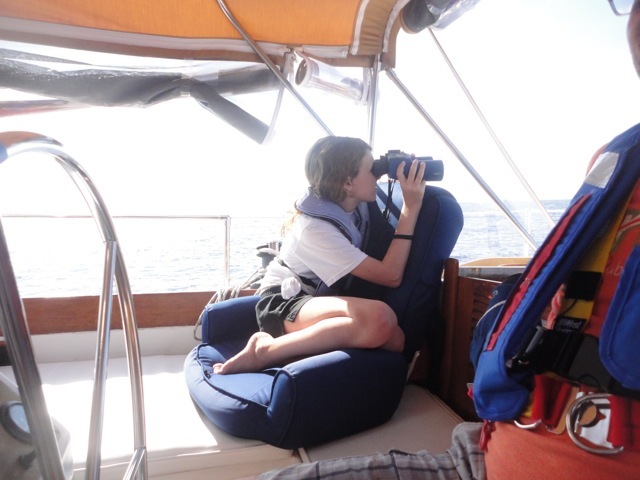
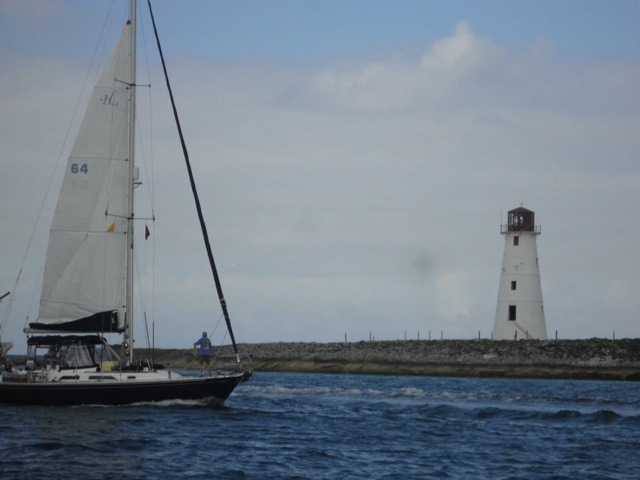
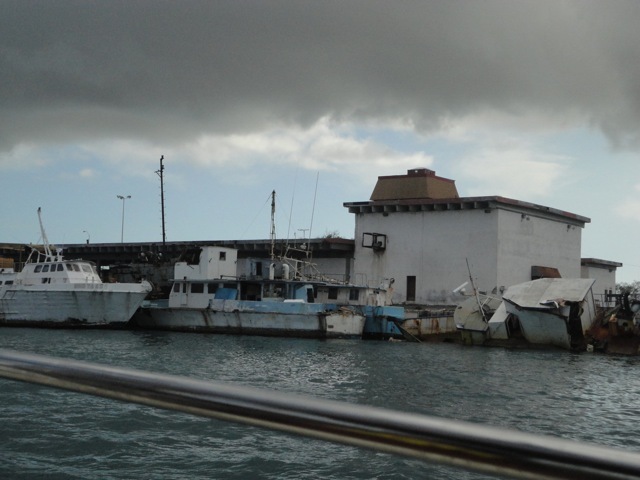
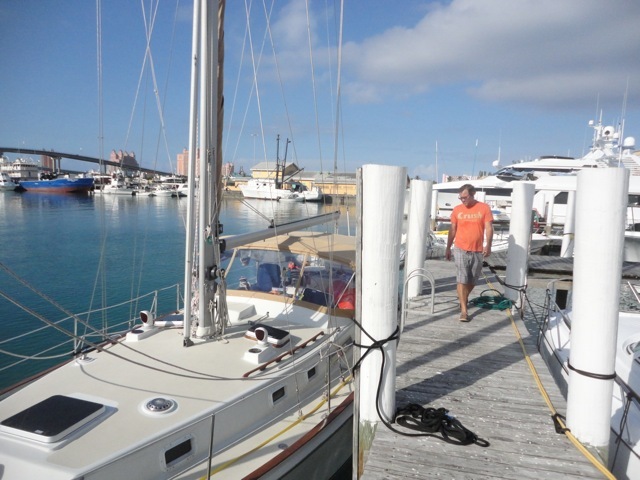
We were so excited to leave Frazer’s Hog because we knew that Nassau was within a six-hour sail. We woke up at 5:30 a.m. and we were off within the half hour along with every other boat that was in the harbor. We, like the rest of the boaters, listen to the popular “Chris Parker” weather forecasts broadcasted over the SSB. Parker will go into great detail about the wind and swells throughout the Bahamas. All the boaters listen and wait for Parker’s ideal sailing conditions. This day was what I have come to call the “perfect Chris Parker day.” Light winds, 2-3 foot swells. We all left like a fleet out of the harbor and followed one right after the other into Nassau.

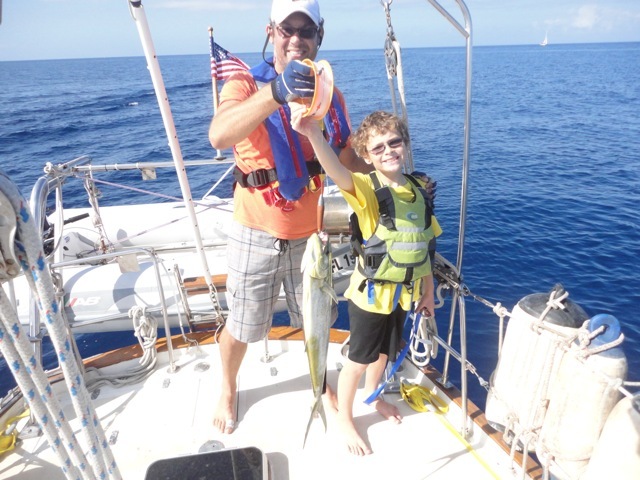
Notice in the photos that this crossing marked Zach’s first catching of the elusive mahi-mahi. Upon entering the harbor, Zach reeled in a 4-5 pound mahi-mahi. We ate it for dinner on our first night here in Nassau. (Gerry, note that this fish was caught with a rather mundane looking wooden lure sold to us by a West Marine young gun.)

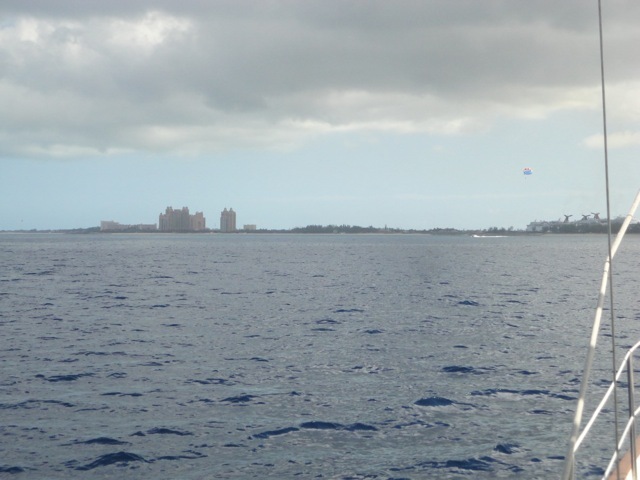
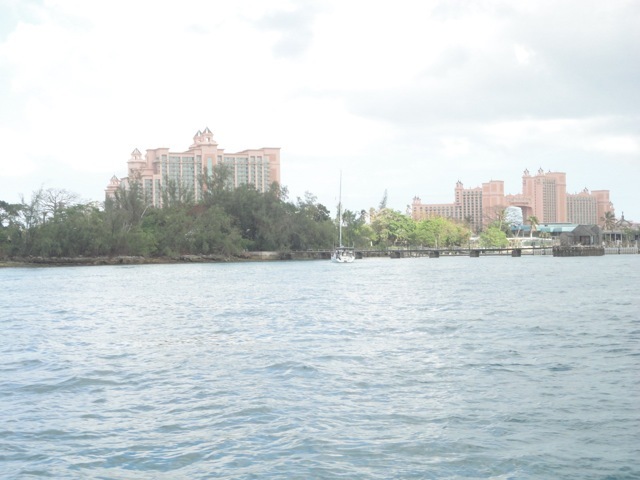
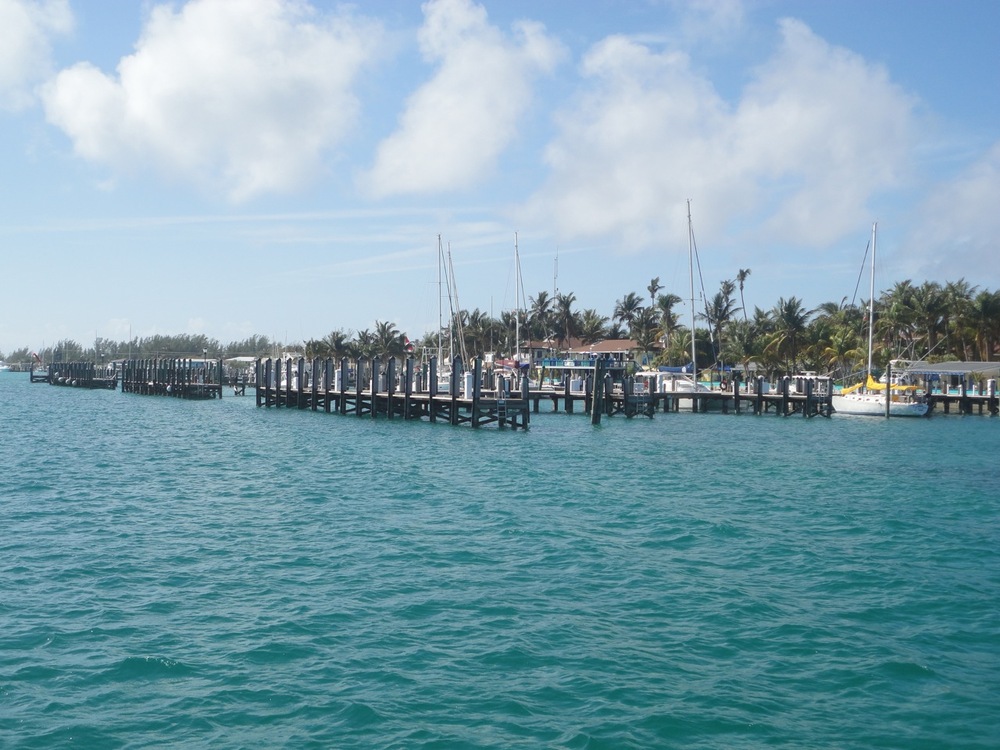
Also notice as we enter Nassau, the immense and posh Atlantis resort. It’s the first structure you see upon land sighting.
Arrival at Frazer’s Hog Cay, Berry Islands

Dsc02185Dsc02197Dsc02191Dsc02186

By Jennifer

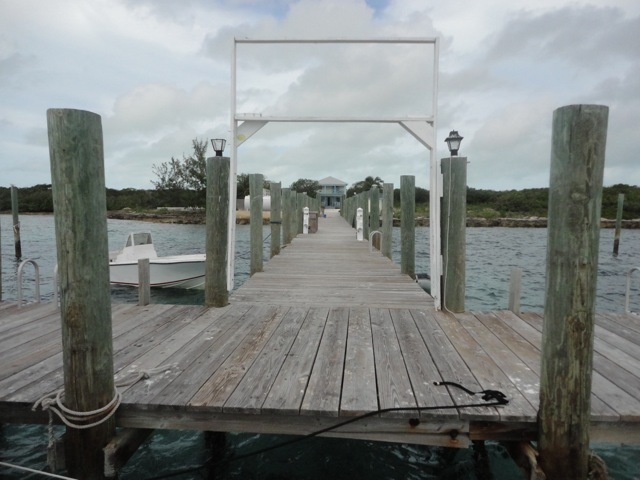
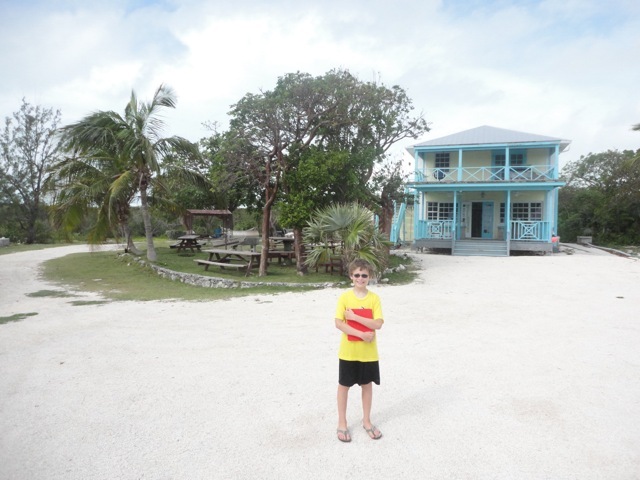
Route: Fort Lauderdale — Miami — North Bimini — Cat Cay — Chub Cay — Frazer’s Hog Cay. We sailed another two hours east from Chub Cay to Frazer’s Hog Cay in the Berry Island chain, where we waited about three days before our next weather window to Nassau. This spot was very enjoyable. This is a popular cruising stop and when we arrived, there were several sail and motor vessels anchored. We actually caught up with many boaters we met in North Bimini and met a few new people — all of us heading in the same direction. You’ll notice the photo of the house where, Howard, is a one-man show. He runs the moorings, the fuel dock and the tavern. One of the reasons we stopped here was because the charts show there are fuel docks. When we arrived we saw the large steel drums. But, when we told Howard we needed to refuel he said he didn’t have fuel. Just like the sign in the window saying he takes VISA/MC (but not really). This becomes a common occurrence as we make our way through the Bahamas — signage promoting what once was.  Howard, trying to accomodate us, called around the island and trucked in a barrel full of fuel (took a few hours). Getting the fuel from the barrel into the tiny fuel tank opening was another story.

Arrival at Chub Cay


By Jennifer and hosted by Kevin

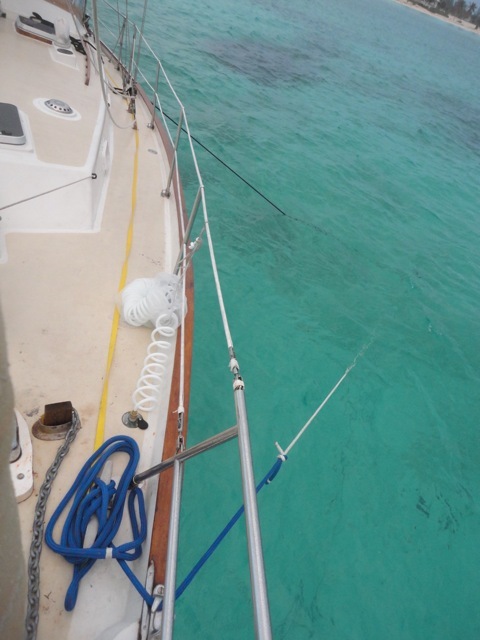
Route: Fort Lauderdale — Miami — North Bimini — Cat Cay — Chub Cay. In this video clip we have just arrived in Chub Cay. It was about 4 p.m. and we had been sailing since 3:30 a.m. We left Cat Cay early because it was rolly and Kevin kept waking up to check the anchor every 20 minutes. Unfortunately, when we got there, the little bay we anchored in was very rolly. As soon as it got dark I went straight to bed and woke up at the crack of dawn the next morning ready to get the heck out of there. Kevin describes how he tied lines to the anchor chain to ease some of the rolling. It made a big difference, but was still a little uncomfortable.

Dsc02162Dsc02160Dsc02180Dsc02178Dsc02164

Beautiful Chub Cay:

Dsc02181

Yachting for Tokens

By Kevin

“Yachting for Tokens” is a little video game that Zach and I created over the past few days. In it, you helm an oldtime schooner looking for the mythical and elusive Arcade Tokens. Watch the white wind indicator and watch out for the islands!

(Design notes: The game was written using MIT’s Scratch programming language. It is designed to demonstrate how the wind angle affects a sailing ship. Remember, yachts cannot sail directly into the wind. So, if you want to go in the direction from which the wind is blowing, you must tack back and forth to make progress. Also, for this particular pixel yacht a beam reach–a 90 degree angle to the wind–is the fastest point of sail. All other points are slower in the game.)

Scratch Project

In and around North Bimini

By Jennifer

Finally, a cold rainy day in Nassau (that wasn’t in the brochure!), so I decided to put up some slides from our time at North Bimini, the first island stop. We spent much of our time there walking up and down


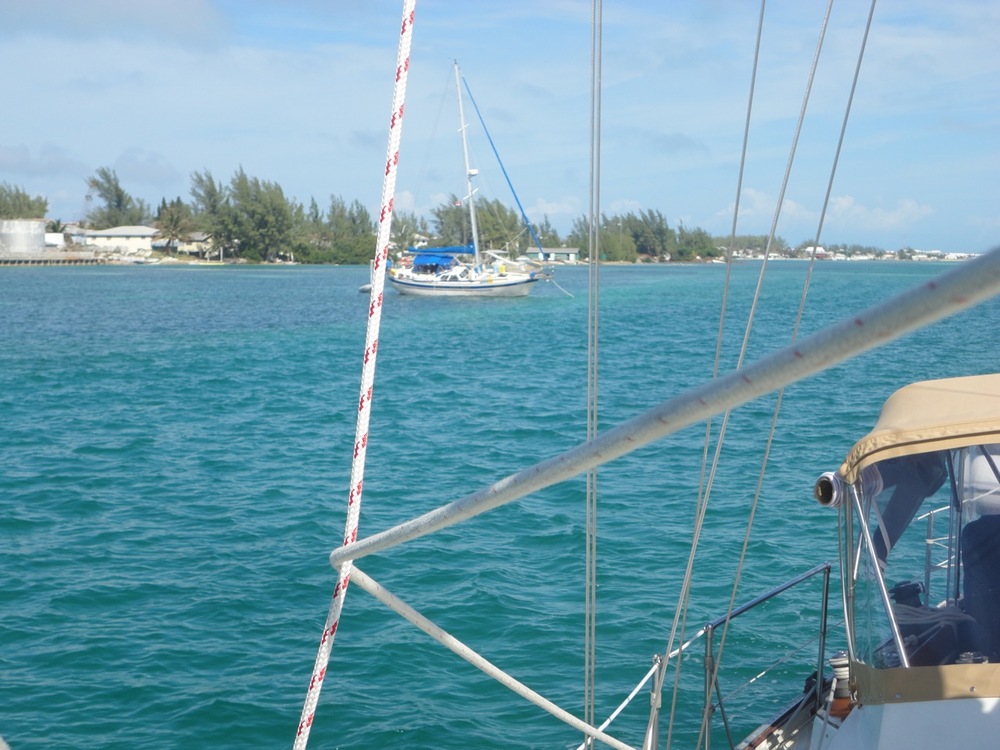
the local street that stretched the length of the island — about two miles. You will see the BIG green boat, which ships in all the island’s supplies and food once a week; a garbage boat that carts the garbage to South Bimini, where it is incinerated; a conch diver cleaning his catch of the day; and Weech’s Dock, were we were tied up for the first week of our nearly two week stay there.

Jen’s Bookshelf III

(Personally rated on a scale up to five stars, *****, five stars being the best)

The Forgotten Garden by Kate Morton. ** This novel, my book club’s November selection, was rather boring and predictable. I don’t know what compelled me more to finish the 545-page mystery — the mild curiosity of why a four-year-old girl was left on a cruise ship all alone in 1913 or the nagging hope that maybe, just maybe, if I continued on there would be a big, exciting twist at the end. Eh. (Read Nov.-Dec. 2012)

11/22/63 by Stephen King. *** My first Stephen King book and I was thoroughly entertained. This story explores the intriguing concept of “what if…” The protagonist, a high school English teacher, is shown by a friend a portal to the past. The English teacher is implored to travel back in time and intercede in the shooting of JFK with the hopes that it would positively alter the course of future events in the United States ie…the Vietnam War. King masterfully weaves in modern day commentary (like Dancing with the Stars comments). He also personifies “the past” like a singular being with its own embodiment that harbors a daunting dark side. I enjoyed the immense amount of research King compiled to write this tale. At the back of the bound book, King talks about his writing process and his inner thoughts about tackling the subject matter that at one time paralyzed our country. (Read Dec. 2012) 

The Pearl by John Steinbeck. *** Madeline’s required reading for Literature and my first Steinbeck novella. A great read if you are looking to exercise your literary side — lots of symbolism and foreshadowing. (Read Oct. 2012)

In the Garden of Beasts by Erik Larson. *** My September book club’s selection. I really enjoyed this book and I can happliy boast I was the only one in the group to finish it. This piece of nonfiction pieces together William E. Dodd’s first year as America’s first ambassador to Hitler’s Germany. The book unfolds the story of Dodd and his family’s time in Germany through a collection of journals, letters and official correspondences. This book reads like “Frontline,” but I really like “Frontline” and enjoyed this book and its insight into this moment in history. I recommend it. (Read Sept. 2012.)

In_the_garden_of_beasts

The Tiger’s Wife by Tea Obreht. ** My August book club’s selection. This book I’ve seen on many book club lists, so I had high expectations. Unfortunately, the book fell well flat of those expecations. I struggled to get to page 100 and went around town begging anyone I knew if they’d read the book and if it would get any better. No one had. Anyway, I slogged through it. I won’t spoil it, but here’s my two cents. The author is a good writer, but she’s like 12 years old if you judge the picture on the back cover. The text is weighed down by too much description. There are too many tangential characters with more really lengthy descriptions. What I found interesting were the stories of the tiger and the deathless man. (Read Aug. 2012.)

wild by Cheryl Strayed. ***** BEST. BOOK. I. EVER. READ. This inspiring memoir can change the trajectory of your life. (Read Aug. 2012.)

Wild_-_cheryl_strayed


Communications Aboard

By Kevin

In a recent comment I was asked what we use for communications aboard. One of our goals has been to “get off the grid” for the year. Well, we realized pretty quickly that totally getting off the internet would deprive us of some important tools. For instance, certain weather resources, HOW-TO’s and manuals, and email and blogging tools for communicating with loved ones.

So, we started focusing less on getting off the grid and more on “getting off the time sucking social networks.” This was our original intention in getting off the grid. We want to spend our time reading novels, hanging out with our kids and each other, homeschooling, snorkeling, and watching sunsets. Not updating Twitter or Facebook or liking posts on Instagram.

With that in mind, here are the different tools we have available for communication.

VHF

VHF is a line-of-sight two-way radio system, similar to a marine CB. It is standard equipment on all but the smallest boats. It allows voice communication between your boat and other VHF stations (boat or shore) up to about 20 miles, depending on weather, the height of the antennas, and the wattage of the transmitters involved.

We use VHF frequently for hailing over vessels, bridges, dockmasters and even restaurants. Also, we can listen in on morning “radio nets,” which are group conversations each morning with the other cruising boats in the immediate area, where tips are shared and requests for help are broadcast.

We have three VHF radios. One is at the navigation station down below. One is in the aft cabin and is accessible from the cockpit helm station. The last one is a rechargable handheld that we take with us in the dinghy.

SSB

SSB (single sideband) is a long-range two-way radio system. SSB allows boats and shore stations to communicate over hundreds or thousands of miles. It is a HAM radio that is specifically designed for marine use.

We use our SSB almost every day. The primary use of SSB for us is to get weather reports. We listen to Chris Parker’s 6:30 AM weather reports on 4045. We also frequently download weather faxes using the SSB and MultiMode. Here are examplesof weather faxes that we review in order to plan our passages:

01dec2012-091502dec2012-0900

We have also listened to entertainment and news on the SSB from sources such as the BBC. 

Satellite Phone

We purchased an Immarsat IsatPhone Pro before leaving Fort Lauderdale. We also pre-purchased 500 airtime minutes and email and web browser compression software called Ocens.

The reason for the satphone, ostensibly, was for emergencies: to call our doctor back home or to call for a towboat, for example. We’ve used the satphone several times to call marinas for reservations when we were outside VHF range. We’ve also made some calls home to friends and family.

We set up the Ocens software so that we can send and receive emails while away from WIFI, which is most of the time. But, checking email is very slow on the IsatPhone Pro. It takes 3-10 minutes to send and receive a few emails.

We have successfully downloaded webpages using the satphone but we’ve had more success using a command line non-graphical browser instead of the Ocens’s modified version of the Firefox browser. (Check out Elinks or Lynx, if you have technical chops.) I’ve set up bookmarks to the specific pages that I need to download with the satphone so that I can retrieve just those pages without surfing around to any unneeded pages. Still, to download one simple page without the images will take 3-5 minutes.

WIFI

When we are in a marina or harbor that has a WIFI signal, we’ve found it absolutely essential to have an external WIFI antenna. The airport cards in our Mac laptops and iPads are just not beefy enough. We’ve chosen the Bear Extender products. Specifically, the Bear Extender Mini for Mac, 5dBi Antenna, and 16 ft USB extension cable.

When we need to we hoist the antenna partially up the mast with one of the flag halyards. Often we just need to put the antenna in the cockpit, with the USB cable going down through the companionway hatch to attach to my Mac laptop. Then, I set up internet sharing on my Mac laptop using my airport card. This allows the other laptops and iPads on board to share my laptop’s internet connection.

Mobile Phone

We have several mobile phones on board that run on the Sprint network. We were surprised to find out that they do work in the Bahamas when we are in range of cell towers. But, if we use them we are paying very high international roaming rates, which we want to avoid at all costs. So, we have them turned off and only use them as a last resort.